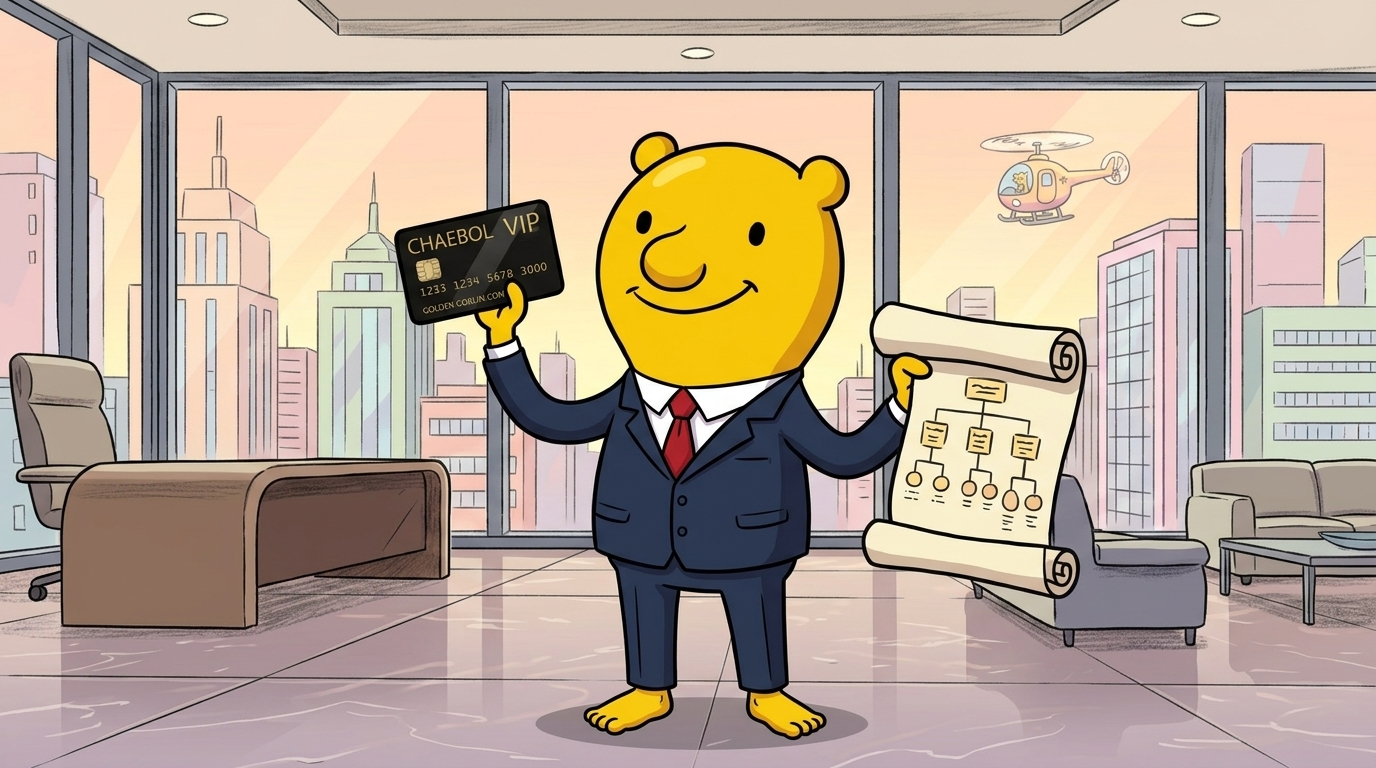
If you have wondered what is a chaebol in kdrama storylines, it does not simply mean a wealthy elite. It signifies South Korea’s family-owned mega-conglomerates like Samsung, Hyundai, and LG, where founding dynasties pass corporate empires through hereditary lines. Born from state-led export policies after the Korean War, these dynastic empires serve as the ultimate storytelling canvas for modern succession wars and cross-class romance.
1. How Does a K-Drama ‘Chaebol’ Differ from Western Billionaires?
For international fans streaming Korean series on Netflix, “Chaebol” is often one of the first cultural terms they memorize. From Kang Tae-moo in Business Proposal and Gu Won in King the Land to Hong Hae-in in Queen of Tears, roughly seven out of ten Korean romance leads are portrayed as heirs or heiresses to gigantic industrial conglomerates.
This raises a natural question for global viewers: How does a Korean chaebol differ from a Silicon Valley tech billionaire or a wealthy hacienda patriarch in Latin telenovelas? If it simply meant someone extraordinarily rich, English subtitles would translate it as “billionaire” or “tycoon” instead of preserving the Korean phonetic term “Chaebol.”
The term combines the Hanja roots Chae (wealth) and Bol (clan or faction), literally translating to a wealthy bloodline clan. Unlike Western multinational corporations run by professional CEOs and boards of directors where founders’ descendants remain passive shareholders, Korean chaebols are ruled almost monarchically by founding families who control vast business empires through complex cross-shareholding webs, often holding only a tiny direct percentage of shares. From smartphones, semiconductors, and cars to department stores, hotels, luxury hospitals, and even the funeral parlor where you are laid to rest—an entire life cycle can operate under the umbrella of a single family’s conglomerate.
Moreover, South Korea became a democratic republic where hereditary aristocracy vanished with the fall of the Joseon Dynasty. With no royal monarchs or dukes, chaebol families living in private castles and passing down billions of dollars have become modern royalty in the public imagination. Prince Charming fantasies, Cinderella romances, and bloody royal court intrigues for the throne are all seamlessly mapped onto the glass-and-steel boardroom towers of modern chaebol dynasties.
💡 Korea’s Deep Love-Hate Dynamic with Chaebols
To native Koreans, the chaebol represents an intricate web of contradictory emotions. Deep down, people resent their hereditary privilege and yearn to see corrupt tycoons held accountable, yet simultaneously dream of attaining such wealth—often giving rise to bizarre fanbases that rally to defend embattled corporate chairmen. In the past, conglomerates silenced negative press with massive advertising budgets, but the rise of digital social media has forced them to craft endearing public personas—spawning viral affectionate memes like “Petit Kun-hee” or “J-Dragon” for Samsung leaders. Some chaebol scions even voluntarily enlist as naval officers to showcase noblesse oblige. Nevertheless, across mainstream K-content, second- and third-generation heirs are still predominantly cast as abusive villains who assault chauffeurs and torment employees, simply because real-life privilege scandals deliver an irresistible surge of dramatic catharsis.
2. Why Are Succession Wars and Arranged Marriages Central to K-Dramas?
Foreign audiences watching chaebol families gathered around marble dining tables scheming to steal voting shares or forcing their children into loveless corporate unions often assume screenwriters are indulging in melodrama. But Korean viewers know the reality is far more ruthless than screen fiction.
Modern South Korean business history is filled with real-life alliances forged through high-stakes marriages. Marrying into the presidential family historically paved the way for conglomerates to acquire strategic national infrastructure, including telecommunications and oil refining monopolies. Intermarriages linking media barons, political elites, and industrial dynasties created an intricate web of elite cartels. For Korean audiences, arranged marriages and cutthroat boardroom coups are not sensational fabrications; they are well-documented facts of modern life.
Consequently, local viewers look past the predictable inheritance conflicts to dissect the raw psychological authenticity and historical references woven into the acting. A prime example is the 2022 ratings titan Reborn Rich. The fictional Soonyang Group and its founder Chairman Jin Yang-chul (played masterfully by Lee Sung-min) were an homage to Samsung founder Lee Byung-chul and Hyundai founder Chung Ju-yung. Beyond the rise of the semiconductor empire, the scene that set Korean online communities ablaze was Chairman Jin grilling his executive chef: “How many grains of rice are in a single piece of sushi?” Recreating an iconic real-world anecdote from the late Chairman Lee Byung-chul at the Shilla Hotel, the show turned history into electrifying television.
The 2024 global phenomenon Queen of Tears executed a similar feat. The Queens Group’s slush fund scandals and intra-family betrayals mirrored the high-profile “Rebellion of the Sons” that fractured real Korean retail giants. Furthermore, Hong Hae-in’s commanding presence as a luxury department store CEO and her husband Baek Hyun-woo’s suffocating experience as an ordinary legal counsel married into an untouchable dynasty closely paralleled the real-life romance and divorce of prominent Korean conglomerate heiresses. To locals, K-drama chaebols are not fantasy; they are dramatic mirrors of front-page business headlines.
💡 Why Koreans Relate to Boardroom Coups
Because Koreans watched real corporate empires expand exponentially through marriages to presidential daughters and strategic political unions, the concept of marriage as a business merger feels entirely natural. Local viewers take the ruthless inheritance battles for granted and instead focus on character nuance and historical easter eggs. When Reborn Rich recreated Samsung founder Lee Byung-chul’s real obsession with counting sushi rice grains, viewers were mesmerized not by the wealth, but by the spine-chilling authenticity of living Korean business history.
3. “Take This Envelope and Leave My Son”: How Chaebol Clichés Have Evolved
To be fair, classic K-dramas relied on outdated tropes. The most famous cliché involved an imperious matriarch summoning her son’s working-class girlfriend to a five-star hotel café, splashing ice water into her face, and sliding an envelope stuffed with cash across the table while demanding a breakup. Through the 2000s in mega-hits like Boys Over Flowers and The Heirs, this spectacle was practically mandatory.
By the 2020s, however, the depiction of chaebols shifted dramatically. A major catalyst was the string of real-world scandals involving third- and fourth-generation conglomerate scions. The infamous 2014 “Nut Rage” incident—where an airline heiress ordered a taxiing commercial airliner to return to the gate over macadamia nuts served in a packet—etched the Korean concept of Gapjil (arrogant abuse of power by the privileged) into global consciousness.
As the unvarnished reality of chaebol arrogance flooded daily news broadcasts, water-splashing and money envelopes ceased to evoke tragic melodrama. Instead, modern K-dramas openly parody and invert these tropes. In comedies like Business Proposal and King the Land, heroines laugh off cash envelopes with witty banter, while entitled heirs learn to confront their own privilege. Meanwhile, Queen of Tears subverted the formula entirely by crowning the female lead as the ruthless corporate titan and turning the male lead into the emotionally expressive underdog fighting for his humanity.
Furthermore, contemporary series showcase a far wider spectrum of chaebol archetypes. In the vigilante thriller Vigilante, Cho Kang-ok is introduced as an annoying, ostentatious corporate heir, yet quickly becomes the protagonist’s most eccentric ally, deploying billions in black-budget resources to bankroll vigilante justice. In the office satire Gaus Electronics, diamond-spoon heir Baek Ma-tan provides hilarious comedy as an oblivious scion trying to survive ordinary cubicle life. On the darker end, crime thrillers like Gangnam B-Side maintain the terrifying archetype of drug-fueled, untouchable cartel bosses who manipulate the police and courts.
💡 The Shifting Spectrum of Modern Chaebol Characters
The days of one-dimensional chaebol heirs are over in modern Korean storytelling. Today, we see wild diversity: from the eccentric billionaire ally in Vigilante who cheerfully funds dark-hero justice, to the clueless diamond-spoon intern in Gaus Electronics struggling with everyday office life, and the chillingly corrupt predators in noir thrillers like Gangnam B-Side. Korean storytellers have turned the chaebol archetype from a sterile fairytale prince into a dynamic canvas reflecting the moral dilemmas and economic absurdities of modern Korea.
4. Which K-Drama Chaebol Archetype Draws You In?
Ultimately, the chaebol in Korean dramas is a dramatic byproduct of South Korea’s rapid economic ascent—rising from post-war ashes to a tech superpower within half a century. The trope houses both a nation’s aspirational hunger for financial triumph and its sharp moral critique of concentrated dynastic power.
Do you prefer sweet romantic comedies where a devoted chaebol heir surrenders everything for love, or high-stakes succession thrillers where families fight tooth and nail for corporate empires? Share your favorite K-drama chaebol character in the comments below.